Sunday, August 12, 2012

Indian Airport Operations


Over the last 3 weeks, I flew 8 times through 6 airports with 3 domestic airlines for personal and work-related trips.  Due to circumstances, I usually arrived hours early for my flight and had the opportunity to observe operations at 2 major and 4 smaller airports.  While Delhi and Mumbai airports processed people much in the fashion of US and other international departure points, I found the system at the smaller airports particularly intriguing.  

Rather than continuously accepting passengers through the system, passengers are processed in batches.  When I arrived more than 1.5 hours prior to my flight, I was allowed through the first checkpoint into the airport but had to wait in a holding area prior to check-in.  Announcements were made when you could move through each step of the process:  check-in, security, and boarding.  After check-in, if your flight has not moved to the security process, you must once again wait in another holding area. 

This system works for the smaller airports because it allows them to control where passengers of a certain flight are at any given point.  It also minimizes the number of staff and parts of the airport that need to be open since flights were also clustered.  I arrived 4 hours early for my flight out of Vadodara, and the airport was all but shut down.  While I was thankfully allowed through the first checkpoint into the airport, the lights in the check-in and security areas were off with no employees in sight.  Only 1 guard was needed to ensure that passengers did not move into the check-in area.  Waiting passengers had only electric fans for cooling.  The air conditioning was only turned on when the check-in process started.  

By herding passengers of each flight through the processing system together, it also makes it simpler for the employees too.  It limited the number of destinations that check-in baggage would have to go, and with only a couple gates available, it limited the confusion of passengers of which flight was boarding.  I wonder if this system would work in a small airport in the US, e.g. White Plains-Westchester (HPN) airport, that really only has 2 gates and passengers in the single, large waiting area are always confused as to which flight is being boarded at which gate, resulting to passengers attempting to get on the wrong flight.  
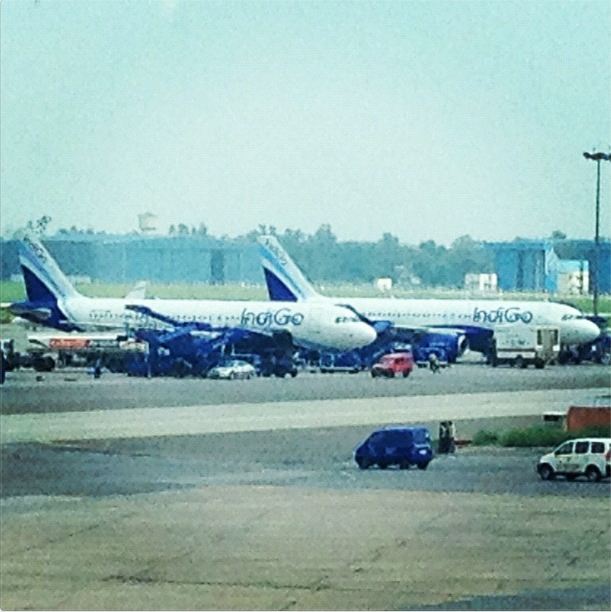

At the Delhi and Mumbai airports, I also appreciated the busing system.  Instead of building a large structure with concourses and individual gates, domestic passengers boarded buses that took them to planes that parked away from the main terminal.  As the passengers were bussed in batches, it allowed the passengers from each bus to settle in their seats before the next bus came, rather than continuously adding passengers into the system causing the backup in the jetways that normally happens on US domestic flights.  Thankfully, I haven’t experienced this system in the rain – I imagine that it becomes much more chaotic and wet during a downpour.  
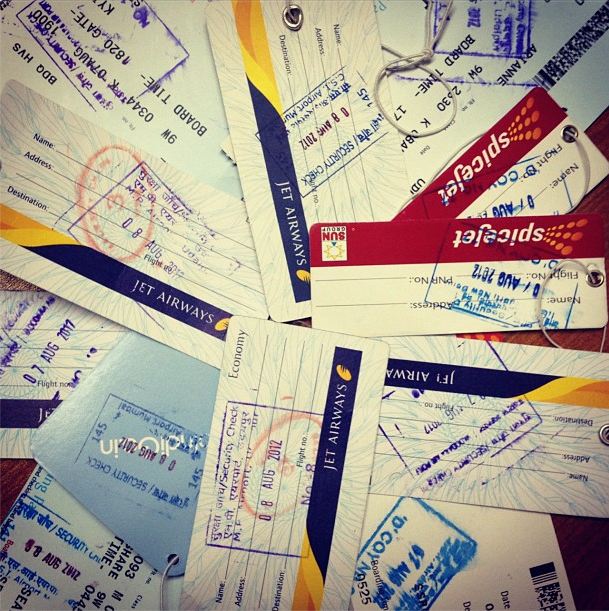
One thing that I do think that India Airport Authority should look into is minimizing the amount of paper used.  For each flight, I needed a printed itinerary in order to be let into the airport at all.  If you did not have one, you could pay for one to be printed at the ticketing office.  No e-itineraries on a mobile phone were accepted.  In addition to the physical boarding pass issued (no mobile boarding issued because security has to stamp it), each carry-on item has to have a tag which gets stamped by security.  After my recent whirlwind tour of Gujarat and Rajasthan, I amassed a lot of paper that had to be thrown away.  While I'm sure India will come on board with accepting e-boarding passes and such soon, US airports should take a look at the operations at their Indian counterparts as well. 

Cultural Exchange

As you can tell from all of my previous posts, I've been having a great time in Rwanda for the last 10 weeks.  It’s been a real adventure, and I've learned a lot about Rwandan culture along the way.  Between going to weddings, attending church services, being surrounded by the local music and a new language, and eating nothing but Rwandan food, I've been totally immersed.  And because I've enjoyed my time with my friends here so much, I've been trying to give a little something back.

American culture is, as in much of the world, pretty pervasive here.  Lots of our music and movies are exported to East Africa, and most of the young people here seem to know a lot more about our celebrities than I do.  And although many of the same singers and actors are idolized in both countries, I can’t help but feel that Reality TV shows, Snoop Dogg, and even Celine Dion (who continues to be massively popular here, for some reason) don’t really represent the American culture that I know.  Sure, those figures are a part of our American culture (never mind that Celine Dion is Canadian), but they’re small parts that are overrepresented here, with the effect that my Rwandan friends only know about those aspects.

Football!
So I decided to share a little bit of the culture that they don’t get exposed to here.  And what is more American than football and bacon?  Luckily I had a few old Michigan football games saved on my hard drive (you never know when they’ll come in handy!), so I asked around and found that there was a ton of interest in seeing them.  Once I showed a few people, I got even more requests.  I think the entire village is hooked on American football now – I must have watched the same three games four or five times a piece over the course of the summer!
Thanks, Mr. Butcher!

The bacon idea was a little trickier.  Rwandan food is mostly based on potatoes, bananas, beans, and assorted vegetables.  Occasionally you’ll see some beef, but I hadn’t eaten any pork since I’d been here.  So I had to make a trip down to the village center on market day to pay a visit to the local butcher.  Each butcher usually kills one animal per day, and unfortunately the first shop I stopped by was slaughtering a cow.  But as luck would have it, the guy next door was about to prepare a pig, so I quickly put in my bid for the belly.  It took a little explaining, since the animals here aren’t really divided into cuts of meat like in the US, but rather just cut apart and sold by weight.  But after some gesticulating and pantomiming, I ended up with 7 pounds of pork belly, ready to be cooked.

Excited about eating a pig
With 7 pounds of meat, I had enough to make two meals.  So I began with a pork belly roast even though it wasn’t part of my original plan.  I managed to scrounge up some salt, sugar, and vinegar to marinate it, and aside from the oven not being hot enough to crisp up the skin, it turned out pretty well!  Meat isn’t roasted here, but is usually just cut into small chunks and sautéed, so it was a new experience for my Rwandan family.  But after that meal, my thoughts returned to bacon.  I decided to cure the remaining pork belly with the same salt/sugar mixture, and I added some local honey as well to make a sweeter bacon.  I searched for days for black pepper to complete the mixture, but nobody in the village had ever heard of it.  I was lucky again though, and managed to find a mostly empty bottle of ground pepper at kitchen of the local church.  With the final ingredient in hand, I combined everything in the fridge and waited a week. 
Something Resembling an American Breakfast


Everyone Loves American Food!
In the end, I couldn’t set up a smoker to put the finishing touches on the mean, so we had to settle for green bacon.  But with a few added accoutrements in the form of hash browns, scrambled eggs, and pancakes, it proved to be quite a success!  


If I’ve accomplished nothing else this summer, I’ve definitely converted some of my friends here into lovers of bacon and football.  And that, I think, is what cultural exchange is really all about.

Saturday, August 11, 2012

Entrepreneur Profile: NextDrop


In the past two months, I have spoken to countless entrepreneurs in almost every sector and at different stages from ideation to growth. I have been impressed by many but one has kept my attention: NextDrop. Before I share why, I want to briefly introduce NextDrop.

What is NextDrop? NextDrop distributes information on water delivery to urban residents via SMS. Anu Sridharan, a graduate student from Berkeley,  and her team have worked to achieve 25,000 subscriptions in less than a year.

How does NextDrop work? Customers pay a monthly subscription fee for NextDrop's service and receive a text message whenever water is available. To ensure that customers receive timely and accurate messages, NextDrop partners with the local water utility and the valvemen who quite literally turn on and off valves that provide water to certain areas. After he turns on or off the value, the valveman calls into NextDrop's automated phone system.

Why is this important? Currently, urban residents in Hubli receive water once every 5 days or so. In addition, information on water delivery is usually disseminated to households through the local newspaper and as you guessed, that information is likely untimely and inaccurate. Less well-off households deal with this uncertainty by having the wife or children stay at home to collect and store water.

Access to clean water, much like power, is likely an afterthought, if that, for most people in the developed world. In India, no municipal water utility provides 24/7 access to water for all households. If you have never experienced the uncertainty of water access, Mary Fritz, a WDI Fellow who interned with Wello, shares a very real and first-hand encounter with this uncertainty when the water purifier at her apartment broke in the relatively developed urban area of Bandra West in Mumbai.

What is the impact on society? In my previous post about social impact metrics, I explored some of the challenges faced by for-profit enterprises seeking social impact and the need to proactively seeking to define, measure, and track social impact rather than assume that their service automatically leads to social impact. By acknowledging that the Customer is King, NextDrop is proactively gathering data to both understand its customers and incorporate social impact into its core operations.
  
Why is NextDrop my favorite social enterprise? Throughout my many conversations with entrepreneurs, I have noticed a few recurring themes that distinguish some enterprises compared to others. My conversation with Anu has now inspired me to write my final blog post on these themes. You will have to wait for my final post but in the meantime, I want to share one theme: transparency. To be frank, NextDrop is not perfect and has been unabashingly open about its mistakes and missteps since its inception. With each misstep, however, NextDrop has also shared its proposed solutions and lessons learned. This transparency is why NextDrop is my favorite social enterprise. Oh, and my personal interests in women-run enterprises and any entrepreneur using technology for social impact (rather than for technology's sake) may also play some role in this.

Obstacles are faced by all start-ups, social or otherwise. NextDrop's willingness to share its trials and tribulations with the world is rare for entrepreneurs, social or otherwise. Returning to my first blog post, I spoke about my experience at the Impact Investing in Action conference co-hosted by Village Capital. During one of the panel discussions , one speaker rightly mentioned that the players in this space need to share both its successes and failures to move the impact investing industry forward. In my own experience, I have seen little in the way of sharing failures. My hope is that other entrepreneurs will embrace NextDrop's transparency while investors will view this as a sign of maturity, humility, and most importantly, its potential for growth.

Thursday, August 9, 2012

Building the Entrepreneurial Ecosystem Part 1: Business Incubator

One of the challenges GEPI (Global Entrepreneurship Program Indonesia) faces in having workshops, events, networking nights, etc is the effort and cost involved in renting a space. Entrepreneurs also don’t have a central place to gather in Jakarta and many entrepreneurs work out of cafes to avoid high office costs.

GEPI is aiming to address this by launching a business incubator/ co-working space a la The Hub where entrepreneurs can rent a desk, network with other entrepreneurs, and get access to mentorship and lower cost services (legal, accounting, etc). We’re partnering with Founders’ Institute Jakarta and Mandiri, the largest state-owned bank, and hope to have it launched in the next few months.

There are some similar spaces already, but most of them take an equity investment in the businesses and as a result are smaller. We’re aiming to house 50-100 entrepreneurs selected through an application process, hold regular workshops and events, and have a structured mentorship program to help them develop their businesses.

The goal of all this is to help bridge some of the major challenges of entrepreneurship here, specifically the lack of management knowledge and strong/ effective networks. In the past, entrepreneurship was the bastion of well-off individuals who could afford to take such a large risk and had access to knowledge and networks, but startups are being pursued by a much wider group now who need this type of support.

Organic Rice Farming

My internship is wrapping up this week, and I’m behind on my blogging! I’ll post on a few of the highlights
over the past months. 
Their product


My last post was a few weeks ago about our visit to a waste management business in Bali; just before that we went to visit a rice farming business on the eastern end of the island of Java. The company helps farmers increase their income by guiding them through the transition from farming conventional white rice to organic red rice and facilitating access to lower cost inputs and premium prices for their organic crop. The bulk of our time there was spent completing the due diligence with our investment partner by talking to the team and all of their stakeholders.

With the farmer's family
We met with one of their farmers/ farmer coordinators to talk about his experiences with organic rice farming and with the business. He was clearly passionate about organic rice and about the benefits of eating red rice instead of white rice (he specifically mentioned ‘keeping you regular’). It was great seeing his passion and how he had used his increased income to benefit his family.

The management team is a group of recent graduates from a top agricultural college here who are really sharp and committed to social impact, but could use help on the business side. One of the team members was in our car giving us some background on the board member we were about to meet. What he failed to mention, and what surprised us all, was the first line out of the board member’s mouth – that he was that team member’s father. The look of confusion and shock around the room were priceless.

Food wise, we had chicken and rice for almost every meal for 5 days – needless to say we were itching for anything else by the time we got to Bali.

With the team

One of their rice fields

Rice being dried
Rice milling unit

Tuesday, August 7, 2012

N-Word in Thimphu

When Francois Hollande ran for President of France in 2012, his campaign tapped into a sore spot in French politics-race relations.  In a broad appeal to the often neglected and disparaged African and Arab communities across his nation, he ran a spot on French television with him on the streets and in public transportation shaking the hands of various minorities. The imagery was on-point but the choice of music was not--Jay-Z and Kanye West’s “Niggaz in Paris.”  Yes…Hollande lifted this American rap export and no… I do not believe he understood the lyrics.

What does this have to Bhutan? Well when American culture, especially media portrayals of Black America is exported overseas, I suffer. Last week when I was walking to the “Himalayan School of Music” (which has one of the few keyboards in Thimphu), my mind was far from Jay-Z. I noticed a group of a dozen teenagers loping down a hill just before me. They crossed the street ahead of me and I passed them by. Just above the din of their banter and boasts, I made out the word ...  the infamous word,
the word that was buried in Detroit several years ago, 
no, not this word but this word. 

Again, it was repeated, this time louder for me to hear. So I did what any black person, who was alone, and out-numbered in the Himalayas would do …  I invited them to my side of the road, sat down and spoke to them.
                “What’s your name?” I started systematically from left to right and got everyone’s name. Not surprisingly, they all had the most common Bhutanese names:
                “Sonam”
                “Tshering”
                “Ugyen”
                “Thuji”
                “Wangchuk”
                “Dorji”
                “Pema”
                “Karma”
                I shook some of their hands and introduced myself, “I’m Yannick. Yannick Wood. My name is not [http://en.wikipedia.org/wiki/Nigga]. If you were in the United States and you said that to a black person you would get in a whole lot of trouble.”
                “Do you have weed?” A 16-yr old right in front of me asked. To insure I understood his q uestion, he put a imaginary blunt to his mouth and took a puff.
                “No. Of course not. Where did you get that idea from?”
                He responded, “Hollywood. In the movies black people smoke pot.”
                I explained to them that they cannot believe everything they see on TV especially through movies. I could see and hear the wheels turning in their heads as they contemplated my response. We concluded our discussion and they went on their way. One of the teenagers apologized to me and left. With this experience fresh in my mind, I proceeded to the music school where I jammed with another Bhutanese teenager to none other than “Hotel California” (this was not my song choice). For better or for worse, these cultural exports are here to stay.
"Bridging" Cultural barriers
                In a very timely CNN article, several minorities who live and work in China divulged their experiences. Like some of these individuals, I have been the recipient of epithets but not all of them are bad. Sometimes I’ve been called Obama and other times Didier Drogba, an Ivorian soccer star that plays for the Shanghai Shenhua team. It is almost as if when they see black, they must immediately cycle through all that they think is black and then immediately draw upon these stereotypes. As our world gets more connected and Black Americans increasingly travel and work overseas I’m sure similar encounters will occur. These encounters are often tense, and sometimes humiliating but we should look at them as "teachable moments." 

What inspires you?

As I was pondering what to write in what is likely my last blog post, I was looking for inspiration: inspiration to write something meaningful, worthwhile and educational for the wonderful people who have been following this blog.

Should I write about the monsoon season and how Delhiites look forward to the rains because it means relief from the 100+ degree Fahrenheit weather? Should I write about the power outage that affected 600 million people (twice the population of the entire United States!) in northern India? Should I write more about life in India and how while there is a divide between the rich and poor, they are able to reside in the same neighborhoods? Or, should I write about finishing my internship deliverables, which included operational process maps, organizational structures, compensation structures, defined job roles and HR overviews?

Inspiration can be different for many people. It could be spiritual, emotional, or practical. For my client, she prefers the principals and teachers to be inspired enough to want to send their students on heritage walks and incorporate heritage education into the schools’ curriculums. She doesn’t try to push them just to increase her numbers. She wants them to feel that there’s a need for heritage education. She wants her “customers” to try it out and see for themselves.

As I am now in my last week in India and at Start Up!, just like there is much to see and do in India but not enough weekends to explore every place, there is much to share but hard to describe it all on paper/blog. There is so much happening in India in the social impact space. Many of us have posted pictures to provide a glimpse into the social sector and life in India, and as the saying goes, "A picture is worth a thousand words." However, sometimes, you just got to come and see for yourself to be inspired.

India: You’ve been good to me these past 13 weeks. I will miss the curiosity, breadth of ideas, convenience of auto rickshaws, home delivery for pretty much everything, house help, reclining seats at the movie theaters, and of course the many Indian and non-Indian cuisines (especially the Chinese food). Thanks for hosting me and look forward to future visits to see the power of inspiration at work!
Glimpse through Amber Fort in Jaipur

Glimpse through the Taj Mahal

Monday, August 6, 2012

Mountain biking in Jakarta?

It has been a while now since I am interning in Jakarta. I never imagined this city to have a thriving adventure sports scene.

It was only during a casual lunch chat with my colleagues that I came to know about a multitude of options like paragliding, water sports, mountain biking etc. that are easily available in Jakarta. I got an invitation to join them to Puncak Highlands, a mountainous area about 65 miles southwest of Jakarta. I had never tried mountain biking before and I always perceived it to be a dangerous activity. Nonetheless, I reluctantly agreed not knowing what lay in store for me.

However, I must admit; it was an exhilarating experience and now it has become a staple weekend activity for me here.


It takes around 2-3 hours to reach Puncak from Jakarta city center depending on the traffic. But once there, it’s an entirely different feel. This place is an oasis away from the noise and pollution of the city. 


Generally the bike ride starts near the now popular Rindu Alam restaurant and goes downhill through tea plantations and villages on a 20 miles run to the start of the Puncak road at Ciawi. 


The rolling green hills with luxuriant tea plantations have been associated with Puncak for centuries, and they are a pleasant sight along the way up. The two biggest plantations here are Ciliwung and Gunung Mas. The route through the Ciliwung tea plantation comes with a small entry charge. Here other options like motocross bikes, 4x4 jeeps, and horses too are available for rent.


I have observed that mountain biking is the most popular outdoor activity here. Jakarta is the mountain biking hub in South East Asia. It has the biggest community of mountain bikers and also boasts the largest franchise and showrooms of mountain biking equipment and accessories.

And the best part is….this activity has given me an opportunity to meet some fascinating people from various walks of life who are brought together by a common thread. I have found an eclectic group comprising a computer engineering, an advertising professional, an economist, an entrepreneur and a taxi driver. We catch up every Sunday and venture out to Puncak.

I have had some great weekends so far and I have enjoyed every bit of my new found activity.

Friday, August 3, 2012

Out and about!

There were a lot of things I did over the summer in and around San Francisco that I loved, so here are a couple of off-beat things I would recommend:

Grab a Bakesale Betty's sandwich


This was something that was highly recommended to me and I am glad I got down to it though it was in the last week. It was probably the first time I saw a 200-strong queue at a working day lunch place. Surprisingly, the line moved fast and I got to try the much talked about baked chicken sandwich, ginger cookie and strawberry shortcake and it was well worth it. 


 Attend the Benicia "Torchlight Parade"

Over the July 4th weekend, I got treated to my first small-town parade and it was delightful. Benicia’s Freedom Festival Independence Day “Torchlight Parade” parade takes place every year on the eve of July 4th with music, dancers, floats, clowns and entertainment and everyone is welcome to partake in the festivities.


Make a trip down to the Russian river 

There are many picnic spots along this river in Sonoma county that are suitable for lazing around, canoeing/kayaking, swimming or fishing. With easy access to food, pubs and wineries and a scenic drive up from San Francisco, this area makes for a great day trip with family or a group of friends.

Progress out of Poverty Index


The poverty line is the minimum level of income deemed adequate in a given country. The poverty line is usually determined by finding the total cost of all the essential resources that an average human adult consumes in one year. At its most basic, the poverty line is a statistical exercise, an attempt to track poverty over time and across specific geographies. It can be used to assess progress in the fight against poverty. The common international poverty line has in the past been roughly $1 a day. In 2008, the World Bank came out with a revised figure of $1.25 at 2005 purchasing-power parity (PPP).

However, increasingly this exercise of assessing poverty is courting controversy as governments have been blamed for fudging data to suit their perspectives. If a reformist stance needs to be communicated, the line is lowered so more people seem better off. And if an international donor is being wooed, the line is raised so that more people seem worse off and in need of aid.

This branch of economics related to the measurement of poverty is anyways one of the most esoteric, and taps into a statistics realm beyond the grasp of most except the most technically savvy.

So what measure should the development world rely on….especially in microfinance….disbursing funds to the poorest of the poor? How does one assess the eligibility, the genuineness and most importantly evaluate the impact of lending?  

I have come across this relatively simpler and more accurate tool that measures the poverty levels of groups and individuals called the Progress out of Poverty IndexTM (PPI™) during my stint here at Grameen Foundation Indonesia.

The PPI is based on an approach developed by Mark Schreiner of Microfinance Risk Management, L.L.C. It is a user-friendly tool that estimates the likelihood that clients’ fall below the national poverty line or the international $1/Day/PPP and $2/Day/PPP poverty lines.

Using the PPI, Micro Finance Institutions can better determine their clients’ needs, the programs that are most effective, how quickly clients’ poverty get alleviated, and what elements help them to move out of poverty faster. Each country has a specific PPI that, while retaining a universal methodology, is based on a country's best nationally representative income and expenditure household survey.

Consultative Group to Assist the Poor (CGAP), the Ford Foundation and the Grameen Foundation endorse the use of rigorous poverty assessment tools and believe the PPI is a highly effective tool for those institutions interested in measuring the likelihood of client poverty.

For each country, the process starts with a nationally representative income and/or expenditure survey. The data from the survey is analyzed to rank indicators that strongly correlate with poverty. These indicators are then tested and vetted with local MFIs and their representatives. The results of the PPI allow an MFI to make informed decisions and improve their processes. 

By using the PPI over time, MFIs can:

  • Improve mission adherence
  • Improve scrutiny and selection of target clients
  • Improve products and programs that are better suited to their target clients
  • Increase their competitive edge, profitability, and ability to retain clients by responding more quickly and effectively to changes in their communities 
  • Provide timely and accurate information to their investors

Alls Well That Ends Well

“The whole object of travel is not to set foot on foreign land; it is at last to set foot on one’s own country as a foreign land.” ~ G.K. Chesterton

Today is my last day in India. In a few hours I board a plane that will take me home. As when I arrived, I leave with mixed emotions: happy to head to the comfort of my familiar life in Michigan, sad to leave new friends, recent adventures, and the opportunity to continue exploring the vastness of India. I have been here for just 10 short weeks – in the scheme of things nothing more than a blink of an eye – but they have been a great 10 weeks that will have a profound effect on how I see the world. If past is truly prologue, then I know that some of the ways I’ve changed won’t reveal themselves to me for a few months and even a few years. Still, I’ve learned some new things along the way, challenged some old beliefs, and gained some new perspectives. Here are a few that come to mind:

I take a lot of things for granted. This experience has shown me that what we become depends in large part on where we start. My life has been shaped by forces that were in motion before I was born and have nothing to do with my choice, my interests, or my natural-born abilities. Much of what I have and much of the opportunities I have been fortunate enough to take advantage of were available to me because I was born a white male to two middle-class parents in one of the richest countries on earth. Don’t mistake me. I’m not saying this is wrong or unfair or bad. I'm not saying that I haven't worked hard or benefited from that work. But to deny that there was a strong foundation built for me upon which I worked is to deny simple fact. For example, at home I don’t obsess on a daily basis about clean water, hygienic food, or deadly diseases. Our advanced infrastructure allows me, instead, to obsess about other things, like when the next Rolling Stones album comes out, what the plot of the next Batman movie will be, or what to write for my next next blog post. India is on the road to matching our largesse, but I can’t help but wonder which is better. Either way, I hope I don’t forget how luxurious my life is in the states.

Electricity shaped my life. Think for a second about how important electricity is in your life. Think about all of the ways you use it: it powers every appliance in your house – your fridge, TV, washing machine, dryer, coffee machine (or espresso machine if you’re cool like that), and microwave. It fuels your gadgets, both the sedentary (desktop computer, wine chiller, etc.) and portable (smart phone, laptop, notebook, Kindle, etc.). Electricity supports your productivity and is the great enabler of your procrastination. It allows you to enjoy movies, milkshakes, and malls. Like me, you may not have realized how much you owe electricity for your personal, social, cultural, and professional development. It has helped you become you. Now, imagine that you grew up in a world without electricity. Who would you have become?

I love start-ups. I knew I loved start-ups already, but this summer helped cement the feeling. Simpa has been a great place to work. I’ve learned some great new skills (data tables! Internal rate of return calculations!), met some fantastic people, worked on challenging projects, slept on the couch for a few weeks, and got to impact a fast-growing start-up poised to change the world. It has only fueled my hunger to start my own company. Now all I need is a good idea…

 
Traveling is better with friends. I’ve traveled near and far in India and seen some incredible sites. On each trip I’ve had the pleasure of traveling with friends. Fortunately, I get to see most of them again in a few weeks. The others I plan to keep in touch with.


Life is boring without a challenge. I came to India for a lot of reasons, but the main reasons were the same ones that have driven me my entire adult life: to challenge myself to try new things, experience life by living it, and constantly work to gain new knowledge, meet new people, and try new experiences. The goal, of course, is to constantly renew myself. Living in India, being separated 8,000 miles from friends and family, and working for an early-stage start-up have all been, to borrow an Indian phrase, a maximum challenge. And I have loved every minute. I wouldn't give any of it up (well, maybe a day or two of diarrhea). It has been a fantastic journey filled with amazing sights, sounds, and people. 

One of my favorite quotes is, “What we obtain too lightly, we esteem too cheaply; ‘tis dearness only that gives everything its value.” If that is true, then my summer in India is as dear and as invaluable to me as any experience I’ve had so far. And that’s saying something. 


Down and Dirty... Part 4. Trains.


Now to highlight the “dirty” part of my internship.

Trying to reach the best fruit
Took the overnight train to Guangdong Province in June to work out of the office in Guangdong for a few days and train the two staff members there (Dolphin and Lynn) on how to use the new CiviCRM. It was quite effective and they gave me great ideas for how to improve the training for the staff in other offices. I got loads of information to analyze in terms of work and communication flows and am really starting to understand how the China offices work together. Looking forward to writing the report for the director on recommendations.

The Guangdong office of CWEF is in a third-tier city called Jiangmen (江门-translates to River Door). They focus all their attention on scholarships for the villager children out in Guangdong. Parents that have lots a limb and can't work, children that have been abandoned, etc. It's really heartwarming to read their letters thanking their donors.

The office is in a really nice apartment complex, so it was surprising to see so many chickens in a residential community. You definitely wouldn't see that in the States (What would the neighbors think!?), but I haven't seen something like that in other parts of China either. The other interesting bit was the amount of fruit trees. Dolphin and Lynn insisted that nobody would care if we picked fruit off the trees, and they both got very excited with my height and monkey arms. I could reach some really high fruit. I came back with loads of green mangoes and what we all decided to call “red mystery fruit”. Turns out that it's called “wax apple”. Tastes like bland star fruit. If you see it in a market, it's probably not worth the money.
Red Mystery Fruit

You may be wondering, “What so dirty about fresh fruit?” Well, nothing actually.

I decided to take the 18-hour sleeper train rather than fly for the experience of it, and to save the 40 USD. Bad idea.

I've taken plenty of trains in China before, and yea, it's not great. But doable. You see the scenery and get to sleep a lot. The problem is when you come home and two weeks later you realize you've picked up skin-eating and blood-sucking parasites. Two different kinds...at the same time. I should have known better when I saw the cleaners just fold the used blankets and put them back on the bed before I got on.

The curséd train
Taking care of these little buggers didn't prove too easy, either. In the States you'd wash all your clothes and sheets in hot water or put them in the dryer on high, vacuum, and basically call it good. In China you boil water on the stove and carry buckets from the shower to the washing machine every time you want to put a load on. Since there are no dryers, you pull out the steamer and steam your duvet and pillows, leaving them on the balcony and sleeping without blankets until the problem is solved. You also have to go out and buy a vacuum and spend a whole week attempting to buy a product on the Chinese Ebay what is readily available at Home Depot (It's called diatomaceous earth, or 硅藻土 guī zăo tŭ). Because you're not a Chinese national and internet banking here is basically impossible, you have to go to the post office to send the seller the money for the order, which is then cancelled for some unexplained reason. You mop your floor in vinegar and leave out bowls of soapy water overnight. You cover everything you own in baking soda...I felt like a 18th century Irish housewife. Having to stay in my room the entire time was the worst part of it, as I risked infecting other people. Had to cancel a trip and couldn't sit on the couch in the living room. My sanity was maintained by the wealth of inherited DVDs.

I was super glad for the international student health insurance, though. Had to go to the dermatologist twice...but it was all covered! Thanks, WDI, for making me buy that!

After three weeks, the problem was finally taken care of. When I travelled to Yunnan, I most definitely took the plane. Off to Cambodia on Sunday!

Thursday, August 2, 2012

countdown

It's cliche, but I seriously can't believe I'm about to leave India already. I've settled in and made a little home here. I have routines, I've learned the ropes, I've learned some Hindi, and I feel like India can't do much that will shock me anymore. Now that I'm comfortable, I'll uproot myself and head 'home.' On the other hand, I'm pretty sure I got here just yesterday. The summer has flown.

In celebration of all things India, I've been keeping some lists:

Numbers
wtf.
  • Elephants: 7
    • 3 working (Bombay, Jaipur)
    • 1 trumpeting (Jodhpur)
    • 2 hanging out eating leaves (Kerala)
    • And 1 named Akbar, that I paid 100 Rs to pet adoringly (Kerala)
  • Monkeys: 8 (until I lost track in Kerala)
  • Times asked to be a Bollywood extra: 2
  • Times asked to take a photo with strangers: 13
  • Times asked to take a photo for strangers: 0
  • Photos "sneaked" of me: countless
  • Edible Arrangements: 1
  • Party Rock Anthem: 1
  • Starbucks: 0
  • Camels: 21 in one day, then I lost count (Ahmedabad + Rajasthan are camel central)
  • Broken dinosaur sculptures: 6
  • Peacocks: I lost count after one jumped at me in Jaipur. Rajasthan is the place to go for peacocks.
  • Cats mating: 2 pair
Favorites

  • Favorite bumper sticker: "Watch out - I STOP at red lights"
  • Favorite way of being asked if I need to use the toilet: "Urine?"
  • Favorite reassurance when the entire bus windshield shatters all over us, and after a quick dusting off we continue windshieldless at 100+ kmph, in the dark, in the monsoon: "Don't feel uncomfortable."
  • Favorite brand rip off: tied between "Google Denim" and "Facebook Restaurant"
  • Favorite sign advertising a police station: "Better late than never."
  • Favorite roadside warning: "When care dies, accident happens."
  • Favorite men's underwear ad: "Style to negotiate a complete surrender." [See 'women' post...]
Recommendations
  • Mumbai
    • Restaurants: Yoga House, Cafe Britannia, The Village, Suzette, Bagel Shop, Fellas, Caravan Serai (but be clear that you are ordering a full chicken, not four chickens.)
    • Shopping: Anokhi, Play Clan
    • Activities: Colaba art galleries, walking along Marine Drive, riding the train, strolling the neighborhoods
  • Ahmedabad
    • Restaurants: Swati Snacks, Green House
    • they say...
    • Highlights: Ghandhi everything
  • Jaipur
    • Restaurants: Haveli
    • Highlights: peacocks, elephants, Amber Fort
  • Jodhpur
    • Restaurants: Omelette shop
    • Shopping: all over the old city
    • Highlights: walking around the old city, Mehrangah Fort, jeeping out all over Rajasthan to meet with rural communities
  • Kerala
    • Restaurants: just have your meals cooked by the houseboat crew
    • Highlights: Munnar climate, houseboating
Things I'm looking forward to
  • Showering without a bucket
  • Sleeping without DEET
  • 6 craft beers for the price of one Hoegaarden
Things I'm not looking foward to
  • My cell phone
  • Lack of papaya
  • Lack of Yoga House
  • That other kind of stress

Wednesday, August 1, 2012

Human Capital Management...say what?


What is human capital? Human Capital management is not what most people think (i.e. recruitment or paying people). Human capital encompasses the competencies, knowledge and experience of talented people that make an organization what it is. Human Capital management is all about having the right people and internal programs in place to fulfill the mission and vision of the organization in the best way through its greatest asset of all: people.

When most people begin a social venture, they think about product design, market demand, promotion, pricing, financing, and growth. Within growth, there is a big piece of the pie called human capital management that needs to be addressed. According to the latest Intellecap report, human capital management is a major challenge for social enterprises in India. It is difficult to find the right talent, specifically for the more senior management roles. Furthermore, it is becoming more difficult for social enterprises to retain talent due to various reasons. For many social enterprises, they are unable to keep up with the competitive compensation packages that bigger corporations or organizations are offering. Another reason is that there are no performance management processes or professional development programs in place for talent to grow within these social enterprises. Therefore, having HR processes and programs in place is essential for these social ventures to grow. Like children, employees need to be nurtured, developed and incentivized. If employees are not nurtured, developed and incentivized, then they will go to other places where they will receive nurturing, development and incentives.

For many social ventures, nonprofits and for-profits, human capital management tends to be towards the bottom of the priority list. My client has done a great job in establishing its product, fundraising, and acquiring a customer base over the past 8 years. However, they haven’t thought about the organizational structure until now. I’ve been happy to help them in establishing an organizational structure, evaluating what roles they need to fill, and examining what other HR processes need to be in place in order for this organization to grow.

I hope that many more social ventures will not forget the importance of human capital management. It’s not just about recruitment or paying people. Without talented and committed people and the right programs in place, an organization will have a hard time growing and scaling.